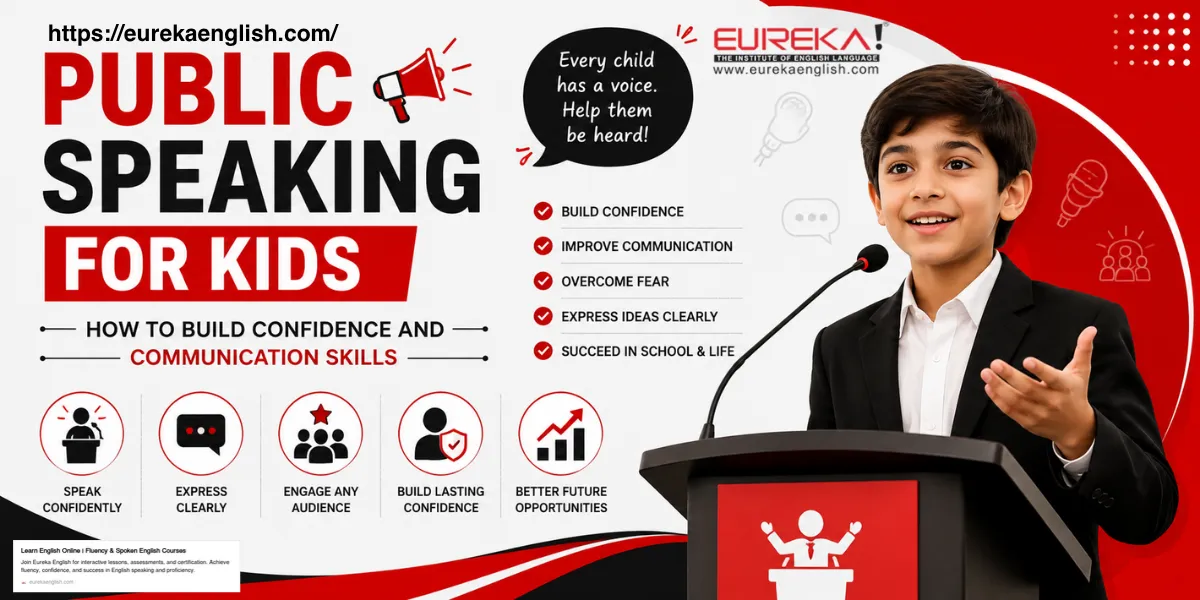
Public Speaking for Kids: How to Build Confidence and Communication Skills
Introduction
Public speaking is an important skill that can help children become more confident, expressive, and effective communicators. Whether a child needs to give a classroom presentation, participate in a discussion, introduce themselves, or speak in front of an audience, the ability to communicate clearly can support their academic and personal development.
Public speaking for kids is not about teaching children to deliver complicated speeches. It is about helping them express their ideas, organize their thoughts, speak clearly, and feel comfortable when others are listening. With regular practice and the right guidance, children can gradually overcome hesitation and develop strong communication habits.
For many children, speaking in front of others can initially feel uncomfortable. They may worry about making mistakes, forgetting their words, or being judged by others. A supportive learning environment can help them overcome these concerns and improve speaking confidence over time.
Why Public Speaking Is Important for Kids
Public speaking develops skills that children can use in many areas of life. Strong communication can help students participate more actively in classrooms, deliver better presentations, work effectively in groups, and express their opinions with confidence.
Developing communication skills for children at an early age can also prepare them for future academic and professional situations. As children progress through school, they may need to give presentations, participate in debates, answer questions, and communicate with teachers and classmates.
Public speaking also encourages children to organize their thoughts before speaking. Instead of simply giving short answers, they learn how to explain an idea, provide examples, and communicate a complete message.
These skills are useful not only for formal speeches but also for everyday conversations.
How Public Speaking Builds Confidence
Confidence does not develop by simply telling children to "be confident." It grows through positive experiences and repeated practice.
When children successfully complete a short speaking activity, they gain confidence in their ability to communicate. The next time they speak, the experience feels more familiar and less intimidating.
This is why confidence building for kids should be gradual. Children can begin with simple activities such as introducing themselves or describing their favorite hobby. Once they become comfortable, they can move toward longer presentations and group discussions.
Teachers and parents should focus on encouragement rather than perfection. Correcting every small mistake can make children afraid to speak. Instead, provide constructive feedback and recognize their effort.
Developing Public Speaking Skills for Kids
Strong public speaking skills for kids involve more than simply speaking loudly. Children need to learn several communication techniques.
1. Clear Pronunciation
Children should practice pronouncing words clearly so that listeners can understand their message. Reading aloud, repeating sentences, and practicing difficult words can improve clarity.
2. Voice and Tone
Speaking in the same tone throughout a presentation can make it difficult for listeners to stay engaged. Children can learn to change their tone and volume depending on what they are communicating.
3. Eye Contact
Appropriate eye contact helps children connect with their audience. Beginners can start by looking at one person at a time rather than trying to look at everyone simultaneously.
4. Body Language
Posture, facial expressions, and hand movements can influence how a message is received. Children should learn to stand naturally, avoid excessive movement, and use simple gestures when appropriate.
5. Organization
A good speech should have a clear beginning, middle, and ending. Teaching children to organize their ideas makes their presentations easier to understand.
These techniques gradually strengthen speaking skills for children and make communication more effective.
Public Speaking Activities for Kids
Children learn best when activities are interactive and enjoyable. Practical public speaking activities for kids can make speaking practice less stressful and more engaging.
Show and Tell
Ask children to bring or choose an object and explain what it is, why they like it, and how they use it. This activity encourages children to speak about familiar subjects.
Storytelling
Give children a short story or ask them to create their own. They can then tell the story to a small group. Storytelling develops vocabulary, expression, memory, and confidence.
Picture Description
Show a child a picture and ask them to describe what they see. This helps children develop vocabulary and organize their thoughts quickly.
One-Minute Speech
Choose a simple topic such as "My Favorite Food," "My Best Friend," or "My Favorite Book." Ask the child to speak about the topic for one minute.
As children become more confident, gradually increase the speaking time.
Role Play
Role-playing everyday situations allows children to practice realistic communication. They can pretend to be a shopkeeper, teacher, student, interviewer, customer, or tour guide.
These activities make learning practical while developing kids communication skills.
Public Speaking and English Communication for Kids
For children learning English, public speaking can also provide valuable opportunities to practice the language. Speaking regularly helps children use vocabulary and grammar in real communication rather than only completing written exercises.
English communication for kids can include introductions, storytelling, presentations, conversations, role-playing, and group discussions.
For example, instead of simply memorizing vocabulary related to animals, children can prepare a short presentation about their favorite animal. They can describe its appearance, habitat, food, and interesting facts.
This approach combines vocabulary development with speaking practice and helps children become more comfortable using English naturally.
How Parents Can Help Children Improve Speaking Confidence
Parents can play an important role in supporting children's communication development at home.
Encourage your child to talk about their day, explain their opinions, tell stories, or describe something they have learned. Give them enough time to finish their thoughts without interrupting.
Reading together can also help. Ask your child to read a short passage aloud and then explain what it means in their own words.
Parents should also avoid comparing children with other speakers. Every child develops communication skills at a different pace. Positive encouragement can make speaking practice feel safe and enjoyable.
Most importantly, allow children to make mistakes. Mistakes provide opportunities to learn and improve.
Public Speaking Classes for Kids
Structured public speaking classes for kids can provide children with regular opportunities to practice speaking in a supportive environment. Professional guidance can help children work on pronunciation, vocabulary, presentation structure, body language, confidence, and audience interaction.
Group activities can be especially useful because children learn to communicate with peers rather than only practicing alone. Presentations, discussions, storytelling, and role-playing can make speaking practice more interactive.
A structured program can also help children progress from simple communication tasks to more advanced presentation skills for kids.
How to Improve Speaking Confidence Step by Step
Children do not need to start with a five-minute speech in front of a large audience. A gradual approach is usually more effective.
Step 1: Start with one-on-one conversations.
Step 2: Practice speaking in front of family members.
Step 3: Introduce short presentations.
Step 4: Practice with a small group.
Step 5: Gradually increase speech length.
Step 6: Introduce larger audiences and formal presentations.
This progression allows children to become comfortable with each stage before moving to the next one.
Benefits of Learning Public Speaking Early
Teaching public speaking at an early age can provide long-term benefits. Children can develop stronger communication, better presentation abilities, improved vocabulary, and greater confidence.
They may also become more comfortable expressing opinions and asking questions. These skills can support classroom participation, academic presentations, group projects, competitions, and future interviews.
More importantly, children learn that speaking in front of others does not have to be something they fear. With practice, preparation, and encouragement, it can become an opportunity to share ideas.
Conclusion
Public speaking for kids is a valuable part of developing confident and effective communicators. Through regular speaking practice, storytelling, presentations, role-playing, and interactive activities, children can develop stronger communication abilities and become more comfortable expressing themselves.
Parents and teachers can support this development by creating positive opportunities for children to speak without focusing excessively on mistakes. With consistent encouragement, children can improve speaking confidence, strengthen their communication skills for children, and develop practical public speaking skills for kids.
Whether through classroom activities, home practice, or structured public speaking classes for kids, the goal should be simple: help children communicate their ideas clearly, confidently, and naturally.
Starting early gives children more time to practice, learn from their experiences, and develop communication skills that can benefit them throughout their education and beyond.