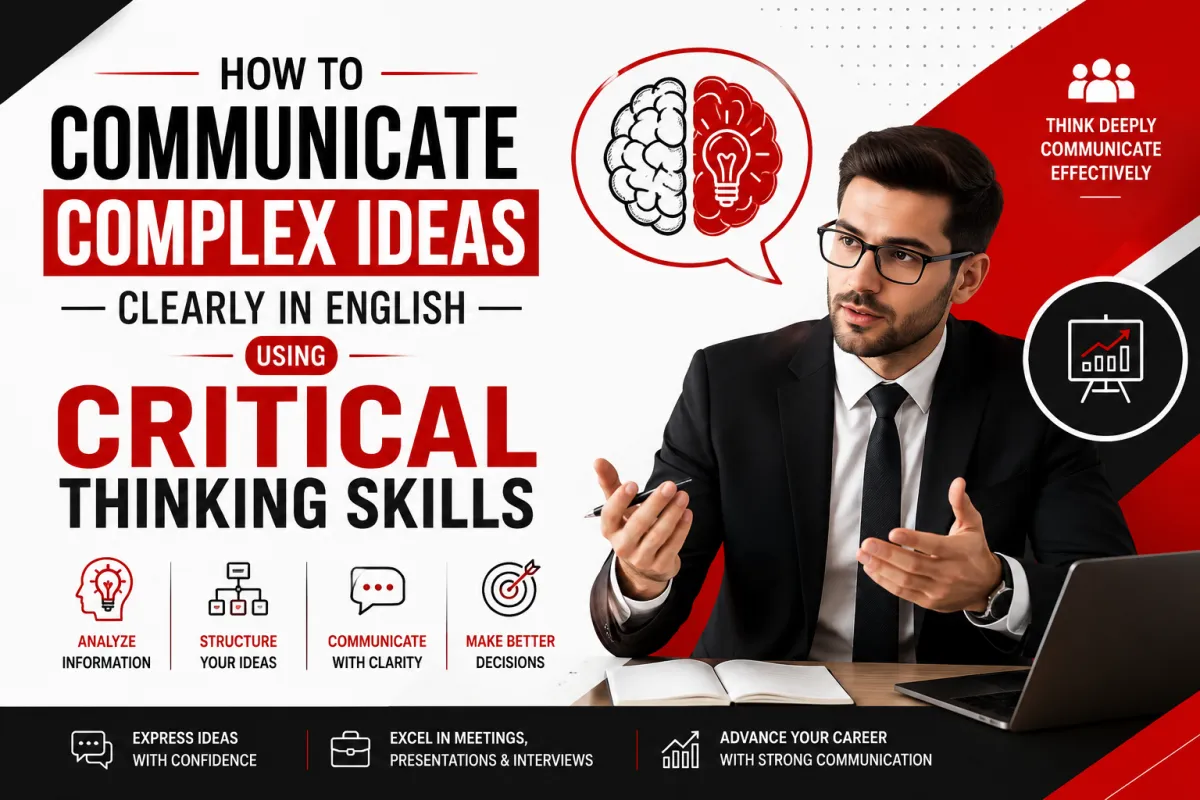
How to Communicate Complex Ideas Clearly in English Using Critical Thinking Skills
Introduction
In today's professional world, success depends not only on what you know but also on how effectively you communicate your ideas. Many professionals have valuable knowledge and technical expertise but struggle to explain complex concepts clearly in English. This challenge often affects workplace collaboration, presentations, meetings, and career growth. Developing strong critical thinking skills alongside effective English communication skills allows professionals to organize their thoughts, explain ideas logically, and communicate with confidence.
If you're wondering how to communicate complex ideas clearly, the answer begins with learning how to think critically before you speak. Clear communication is not simply about using advanced vocabulary or speaking fluent English. It requires analyzing information, organizing ideas, and presenting them in a way that is easy for others to understand. This combination of professional communication and structured thinking helps professionals perform more effectively in high-pressure workplace situations.
Strong professional English communication is especially important in multinational companies, client meetings, interviews, presentations, and leadership roles. Employers value professionals who can explain problems, recommend solutions, and communicate decisions with clarity. Individuals who combine technical knowledge with excellent communication skills often become more effective team members and future leaders.
This guide explains how critical thinking skills improve communication, strengthen analytical communication, and support better workplace decision making. Whether you're a student preparing for your career or a working professional aiming for leadership, these strategies will help you communicate complex ideas more clearly and confidently in English.
Why Critical Thinking Improves English Communication
Effective communication begins long before speaking or writing. Before explaining an idea, professionals need to understand the problem, analyze available information, evaluate different perspectives, and organize their thoughts logically. This is where critical thinking skills play a vital role.
People with strong critical thinking abilities communicate more effectively because they focus on clarity rather than complexity. Instead of presenting scattered information, they explain ideas step by step, making it easier for listeners or readers to understand the message. This structured approach improves both professional communication and overall workplace performance.
Strong English communication skills also help professionals adapt their message for different audiences. A presentation for senior management requires a different communication style than a discussion with colleagues or clients. Critical thinking enables professionals to select relevant information, prioritize key points, and communicate confidently without causing confusion.
As professionals improve both their thinking and communication abilities, they become better prepared to handle presentations, meetings, negotiations, and business discussions where clear explanations are essential.
The Importance of Analytical Communication in the Workplace
Modern workplaces require employees to solve problems, evaluate information, and make informed decisions every day. These responsibilities depend heavily on analytical communication—the ability to examine information carefully and communicate conclusions in a logical and professional manner.
Whether you're presenting a project update, explaining a business strategy, or discussing possible solutions with your team, clear communication supports better collaboration and more effective workplace decision making. Employers appreciate professionals who can explain complex situations without overwhelming their audience.
Developing professional English communication also helps professionals participate more confidently in meetings, contribute meaningful ideas, and respond thoughtfully under pressure. Instead of reacting impulsively, they communicate with structure, confidence, and purpose.
Building these communication habits not only improves workplace performance but also creates opportunities for promotions, leadership roles, and long-term career growth.
How to Improve Critical Thinking Skills for Better Communication
If you're looking for how to improve critical thinking skills, the first step is learning to organize your thoughts before communicating them. Many professionals understand a topic well but struggle to explain it because their ideas are not presented in a logical order. Taking time to analyze information, identify the main objective, and structure your message helps make your communication clearer and more effective.
Strong critical thinking skills also involve evaluating different perspectives before reaching a conclusion. Instead of responding immediately, successful professionals consider available information, identify possible solutions, and communicate their recommendations with confidence. This approach improves both decision-making and the quality of professional communication in the workplace.
Reading industry articles, participating in professional discussions, and solving workplace challenges also strengthen analytical thinking. These activities encourage professionals to process information more effectively and communicate ideas with greater clarity.
Communicate Ideas Clearly at Work
One of the most valuable workplace abilities is the skill to communicate ideas clearly at work. Whether you're presenting a proposal, explaining a project update, or discussing a solution during a meeting, your message should be organized, concise, and easy to understand.
Effective English communication skills begin with simplicity. Instead of using complicated vocabulary or lengthy explanations, focus on presenting one idea at a time and connecting each point logically. Clear communication helps colleagues understand your message quickly, reduces misunderstandings, and encourages productive discussions.
Professionals should also adapt their communication style based on their audience. Managers, clients, and team members may require different levels of detail. Understanding your audience allows you to explain complex information more effectively while maintaining professionalism.
Active listening is equally important. Listening carefully before responding helps you understand the conversation, answer questions accurately, and contribute meaningful ideas. These habits strengthen professional English communication and improve collaboration across different workplace situations.
Develop Professional Communication Under Pressure
Many professionals find it challenging to communicate clearly during presentations, meetings, interviews, or difficult workplace discussions. Pressure often causes people to speak too quickly, lose focus, or struggle to explain their thoughts logically. Developing strong professional communication skills helps overcome these challenges.
Preparation plays a major role in confident communication. Reviewing key points before meetings, organizing your ideas, and practicing important discussions allow you to communicate with greater confidence. The more familiar you become with professional conversations, the easier it becomes to express your ideas naturally.
Improving analytical communication also helps professionals remain calm under pressure. Instead of reacting emotionally, they analyze the situation, evaluate available information, and communicate thoughtful solutions. This ability supports better workplace decision making while demonstrating professionalism and leadership potential.
Consistent practice is the key to improvement. Participating in workplace discussions, presenting ideas regularly, and seeking constructive feedback gradually strengthen both critical thinking and communication skills.
Accelerate Your Growth with Professional Communication Training
Although self-study can improve your communication, structured professional communication training helps you develop the confidence and practical skills needed for today's workplace. A well-designed course combines critical thinking skills, professional English communication, and real-world business scenarios to prepare learners for meetings, presentations, workplace discussions, and leadership roles.
Professional training also provides opportunities to practice English communication skills through interactive activities, case studies, presentations, and problem-solving exercises. With expert feedback, learners identify areas for improvement and develop the ability to explain complex ideas more clearly and confidently. Over time, this practical experience strengthens analytical communication and prepares professionals to make better decisions under pressure.
Continuous learning and regular practice help professionals communicate effectively in challenging situations while building credibility and trust with colleagues, managers, and clients.
Final Thoughts
Strong critical thinking skills and effective professional communication are essential for career success in today's competitive workplace. The ability to analyze information, organize ideas, and explain complex concepts clearly allows professionals to contribute more effectively during meetings, presentations, and workplace discussions.
If you're looking for how to communicate complex ideas clearly or how to improve critical thinking skills, remember that improvement comes through consistent practice, structured learning, and real-world application. Developing stronger English communication skills not only improves your confidence but also supports better workplace decision making, stronger collaboration, and long-term professional growth.
For learners who want to communicate with greater clarity and confidence, our Diploma in Eureka Direct English (DEDE) offers comprehensive professional communication training focused on critical thinking, workplace communication, business presentations, leadership communication, and advanced English skills. The course is designed to help students, job seekers, and working professionals communicate effectively in modern corporate environments.
👉 Ready to strengthen your communication and advance your career? Register for our Professional Communication Course through the Diploma in Eureka Direct English (DEDE) and develop the skills employers value most.