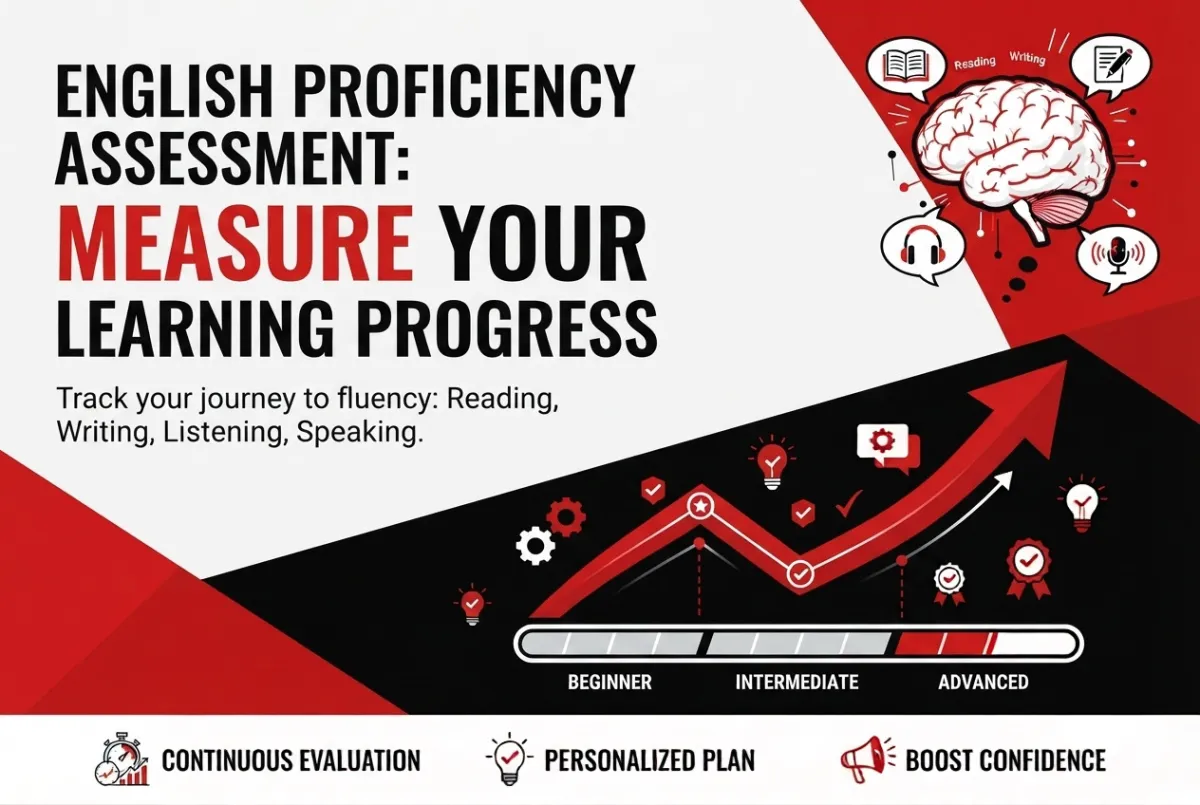
English Proficiency Assessment: How to Measure Your English Learning Progress
Learning English is a journey, and every successful journey requires regular evaluation. Many learners spend months studying grammar, vocabulary, and speaking skills but never stop to measure their actual progress. Without an English language assessment, it's difficult to know your strengths, identify weaknesses, or determine what skills need more attention.
Whether you're preparing for higher education, job interviews, or international exams, understanding your current English proficiency level is essential. Regular assessments provide a clear picture of your abilities and help you create a focused learning plan. Instead of guessing your progress, you can track measurable improvements and stay motivated throughout your English learning journey.
In this guide, you'll learn how to assess English level, why continuous evaluation matters, and how it can accelerate your English learning progress.
Why English Language Assessment Matters
Many learners believe that completing a course automatically means they have become fluent. However, true progress is measured through consistent English language assessment, not by the number of lessons completed.
A well-designed English assessment evaluates your reading, writing, listening, speaking, grammar, and vocabulary skills. These assessments highlight areas where you're performing well and identify the skills that require additional practice.
For example, you may have excellent grammar but struggle with speaking confidence. Another learner may communicate fluently but need improvement in writing or pronunciation. Regular assessments help create a personalized learning strategy instead of relying on guesswork.
How to Assess Your English Level
If you're wondering how to assess English level, start by evaluating all four core language skills:
Reading comprehension
Listening ability
Speaking confidence
Writing accuracy
You can also measure your grammar knowledge, vocabulary range, pronunciation, and communication skills through structured exercises and mock conversations.
An effective English proficiency assessment doesn't only measure what you know—it also evaluates how well you can apply your knowledge in real-life situations. Practical communication is a much stronger indicator of progress than memorizing grammar rules alone.
Recording your speaking, taking online quizzes, completing writing tasks, and participating in conversations are excellent ways to monitor your improvement over time.
Track Your English Learning Progress
One of the biggest mistakes learners make is studying without measurable goals. Continuous evaluation allows you to monitor your English learning progress and stay motivated.
Instead of saying, "I want to speak English better," create measurable goals such as:
Learn 20 new vocabulary words each week.
Speak English for 15 minutes every day.
Improve pronunciation through regular practice.
Complete one English assessment every month.
Keeping a learning journal or progress tracker helps you see how far you've come. Small improvements add up over time and significantly increase your confidence.
Continuous Assessment Builds Confidence
Confidence comes from seeing measurable improvement. Every successful English proficiency assessment provides valuable feedback that helps learners focus on the next stage of development.
Rather than viewing assessments as examinations, think of them as progress checkpoints. They reveal your strengths, identify areas for improvement, and help you study more efficiently.
Many professional language institutes also use continuous assessments because regular feedback leads to better long-term results than one final examination.
Choose a Structured Assessment Program
If you're serious about improving your communication skills, consider joining an English assessment course that provides regular evaluations, expert feedback, and personalized improvement plans.
A structured program ensures that your grammar, vocabulary, pronunciation, listening, and speaking skills develop together instead of separately. Continuous assessments keep you accountable and help you progress more quickly toward fluency.
When you're ready to measure your current ability, you can also take English assessment test to identify your proficiency level and create a targeted learning roadmap.
Common Mistakes to Avoid During English Assessment
Many learners become discouraged when they don't achieve the results they expect in an English language assessment. However, assessment is not about proving perfection—it's about identifying opportunities for improvement. Treating every assessment as a learning experience helps you make steady progress instead of feeling disappointed.
One common mistake is focusing only on grammar scores while ignoring communication skills. Although grammar is important, true English proficiency also depends on your ability to understand conversations, express ideas clearly, and communicate confidently in different situations. A balanced assessment should evaluate listening, speaking, reading, and writing rather than relying on grammar alone.
Another mistake is taking an English assessment only once. Language learning is a continuous process, and your skills change as you practice. By evaluating yourself regularly, you can measure your English learning progress and identify areas that require additional attention. Monthly or quarterly assessments are an excellent way to stay motivated and monitor improvement over time.
Learners should also avoid comparing their results with others. Everyone begins their English learning journey with different experiences and goals. Instead of competing with classmates or colleagues, compare your current performance with your previous results. Seeing gradual improvement builds confidence and encourages consistent practice.
Set Clear Goals After Every Assessment
Knowing how to assess English level is only the first step. The real value comes from using assessment results to create an effective learning plan. After each evaluation, identify two or three skills that need improvement and focus your study sessions on those areas.
For example, if your assessment shows strong reading skills but weaker speaking ability, spend more time practicing conversations, improving pronunciation, and listening to native speakers. If writing is your weakest area, work on sentence structure, vocabulary, and grammar exercises. Small, targeted improvements produce better results than trying to improve everything at once.
Many learners benefit from joining an English assessment course, where experienced instructors provide regular feedback and personalized guidance. Professional assessments not only measure your performance but also recommend practical strategies to help you improve more efficiently.
When you're ready to evaluate your current ability, don't hesitate to take English assessment test and establish a clear starting point. Regular assessments combined with focused practice will strengthen your communication skills, increase your confidence, and help you achieve long-term English fluency much faster.
Final Thoughts
Achieving English fluency requires more than consistent practice—it requires consistent measurement. Regular English language assessment allows you to monitor your English proficiency, evaluate your English learning progress, and identify the skills that need improvement.
Whether you're a beginner or an advanced learner, continuous assessment keeps you focused, motivated, and moving toward your goals. By measuring your progress regularly and following a structured learning plan, you'll develop stronger communication skills and achieve lasting English fluency.
Related Reading: To see how English assessments fit into a complete learning journey, explore our How to Improve English Communication Skills roadmap. It provides a step-by-step path from beginner English to advanced professional communication.